
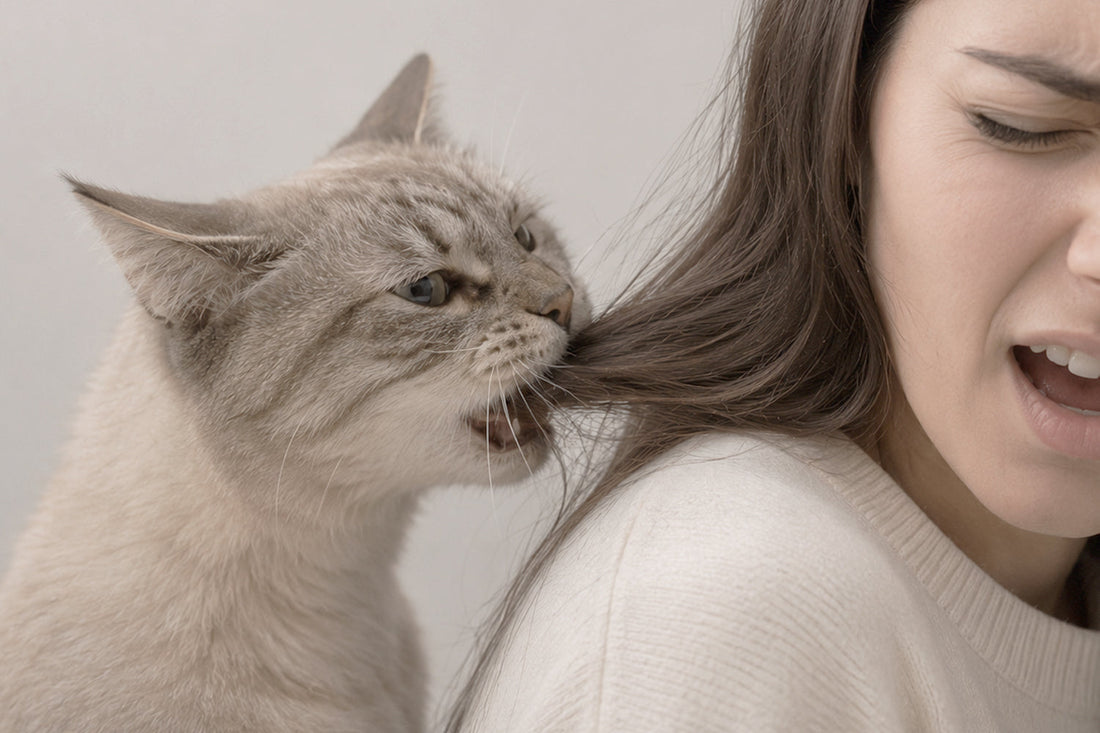
If your cat licks or nibbles your hair, it's most likely nothing to worry about. This behaviour is rooted in feline social instinct and is usually a sign of an affective bond. But what does it mean exactly, and when should you consult a vet?
Why does your cat bite your hair?
There are several reasons why a cat might show this behaviour. Most of them are completely normal:
Social grooming (allogrooming)
In the wild, cats living in groups groom each other in hard-to-reach areas such as the head and neck. This behaviour is called allogrooming and is a sign of a strong affective bond. When your cat licks or nibbles your hair, they are simply including you in their social group: for them, you are one of their own.
Sign of affection and belonging
Cats only groom individuals they feel safe with. The fact that your cat dedicates time to licking or nibbling your hair is, ultimately, an expression of trust and affection. At the same time, they deposit their scent on you, marking you as part of their familiar territory.
Playful behaviour
The movement of hair can be stimulating for a cat, especially if they are bored or have excess energy. In that case, the nibbling is a form of play and a way of getting your attention. It is usually accompanied by paw swipes or a generally active state.
Attention seeking
If this behaviour always happens at the same moments —for example, when you are focused on your phone or working— your cat may be asking for interaction. Cats quickly learn which actions get a response from their human.
When should I worry?
In most cases, this behaviour is completely harmless. However, there are situations that warrant veterinary attention:
Compulsive or excessive behaviour
If the grooming directed at your hair becomes repetitive, intense or difficult to stop, it may be a symptom of feline obsessive-compulsive disorder. In these cases, the vet will assess whether there is a behavioural imbalance.







Feline stress or anxiety
A stressed cat may develop repetitive behaviours such as compulsive licking or nibbling. Changes at home, the arrival of a new animal, or a lack of stimulation can trigger it. Chronic stress can also manifest on the skin: psychogenic alopecia —symmetrical bald patches from excessive grooming— is one of the most common skin diseases in cats of anxious origin. In addition to veterinary consultation, quality nutrition and stable routines contribute to the cat's emotional balance.
How do I get my cat to stop biting my hair?
If the behaviour bothers you, you can redirect it without punishing your cat:
- Do not reinforce the behaviour. Avoid stroking or speaking to them at that moment: any attention, even negative, can reinforce the behaviour.
- Calmly move away. Get up or turn your head as soon as they start. Cats associate moving away with a clear message.
- Offer an alternative. An interactive toy or a play session can channel that energy more appropriately.
- Enrich their environment. Scratching posts, climbing furniture, intelligence toys and windows to observe the outdoors reduce feline boredom.
- Do not punish them. Punishment generates stress and worsens behavioural problems in cats.
Nutrition and emotional wellbeing of the cat
A cat's emotional wellbeing is closely linked to their physical health. A balanced diet tailored to their needs promotes a stable nervous system and reduces the predisposition to stress. Choose quality cat food with animal protein sources, without artificial ingredients. If your vet detects anxiety, they may also recommend specific supplements with calming properties.
To better understand your cat's behaviour, we recommend our article on the keys to understanding your cat's body language.
Frequently asked questions
Is it dangerous for my cat to bite my hair?
No, in most cases it is not dangerous. The behaviour is instinctive and part of social grooming. It only requires veterinary attention if it becomes compulsive or excessive.
Why does my cat only bite my hair when I sleep?
At night, in a quiet environment, the cat may feel particularly close to you. They may also take advantage of that moment for grooming because you are still and relaxed.
Does my cat bite my hair because they like the smell of shampoo?
It is possible that the smell seems curious to them or that the movement of the hair draws their attention, but the main motivation is usually the affective bond, not the smell itself.
How do I know if the behaviour is normal or compulsive?
If it happens occasionally and the cat stops easily when you move away, it is normal. If the grooming lasts a long time, the cat seems unable to stop, or it appears alongside other repetitive behaviours, consult the vet.
At what age do cats usually start this behaviour?
It can appear at any time, although it is more common in adult cats with a consolidated affective bond with their reference person.


