
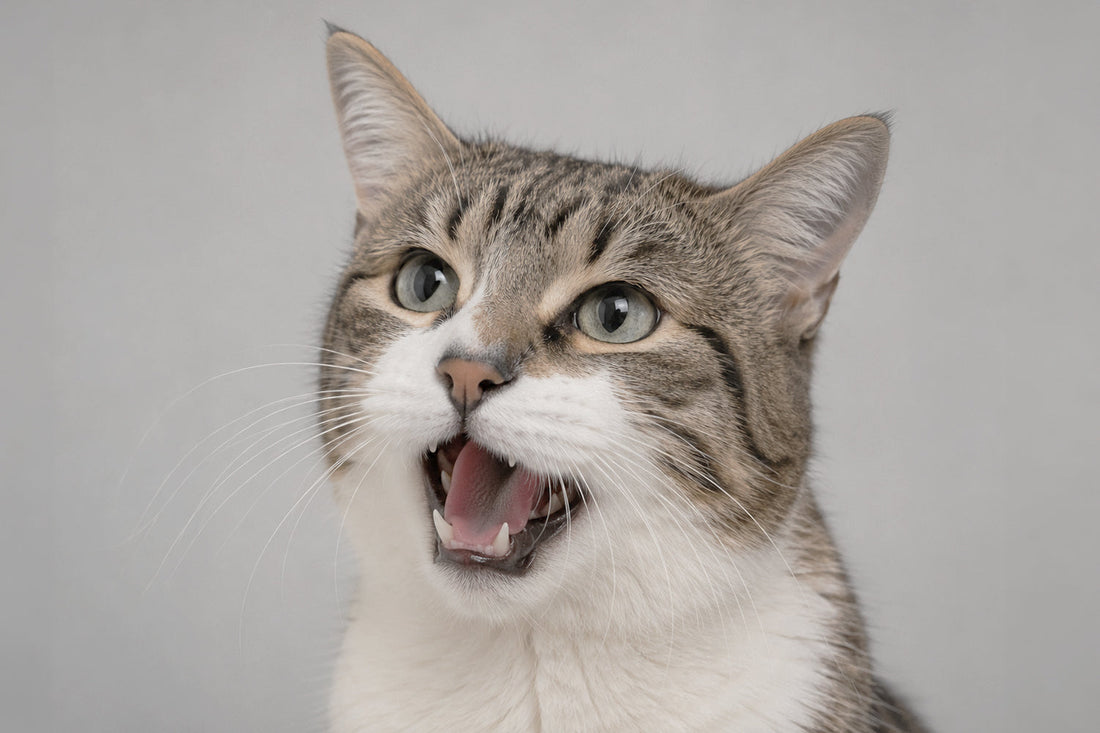
A cat's meow is one of the most important sources of information about the health and mood of our little felines. Knowing why and how cats meow can give us plenty of clues about what is wrong, what they want and how our cat is feeling.
What is a cat's meow for?
Although kittens meow to let their mother know they are hungry, cold or feel in danger, once they grow up they stop meowing at other cats. They do, however, keep meowing at people throughout their lives. Adult cats only use the meow to communicate with humans. It is their way of expressing themselves and getting what they want. As we will see below, cats can meow for many reasons. As well as meowing, cats also yowl. A yowl is a sound similar to a meow but much longer and more melodic. Unlike the meow, adult cats do yowl at one another, especially during the breeding season.

Why do cats meow? The most common causes
If you are wondering why cats meow, below we explain the most common reasons and the types of meow they usually use on each occasion:








- To greet people. Cats normally meow when their family members come home or when people talk to them. These meows are usually soft and affectionate.
- To get attention. Some cats love social contact with people and are very vocal when demanding attention. A cat may use intense, long meows to ask to be stroked or played with. Cats that spend long periods alone at home tend to be more likely to meow for attention.
- To ask for food. Some cats meow insistently every time someone walks into the kitchen, trying to get a little food. Other cats meow persistently when they wake up to ask for breakfast, or when they think their next meal should be ready.
- To ask to be let in or out. The meow is the cat's main tool for getting what it wants. When a furry friend wants to leave a room, it will probably make short, soft meows by the door. Likewise, if it is outside the room and wants to get in, it will meow for you to let it in.
- To find a mate. Although adult cats are more likely to yowl during the mating season, some females in heat may make constant, intense, broken meows to attract the attention of males.
My cat meows a lot: what is the reason?
Now that you know why and how cats meow, you may wonder when a cat's meowing becomes excessive behaviour. It is hard to know whether a cat meows a lot because, although all cats meow, the intensity and frequency depend on the characteristics and personality of each animal.
It should also be borne in mind that some breeds, such as Siamese, are more prone to excessive meowing and yowling. If you think your cat meows a lot, the best thing is to take it to the vet to make sure the cause of the meowing is not an illness. As cats age, the likelihood of developing certain conditions increases, such as kidney failure, an overactive thyroid or cognitive dysfunction. All of these illnesses can be the cause of excessive meowing in a senior cat.
However, if your cat is strong and healthy, there is no need to worry. Most likely, the main reason for its meowing is simply a search for food, affection or attention.


