
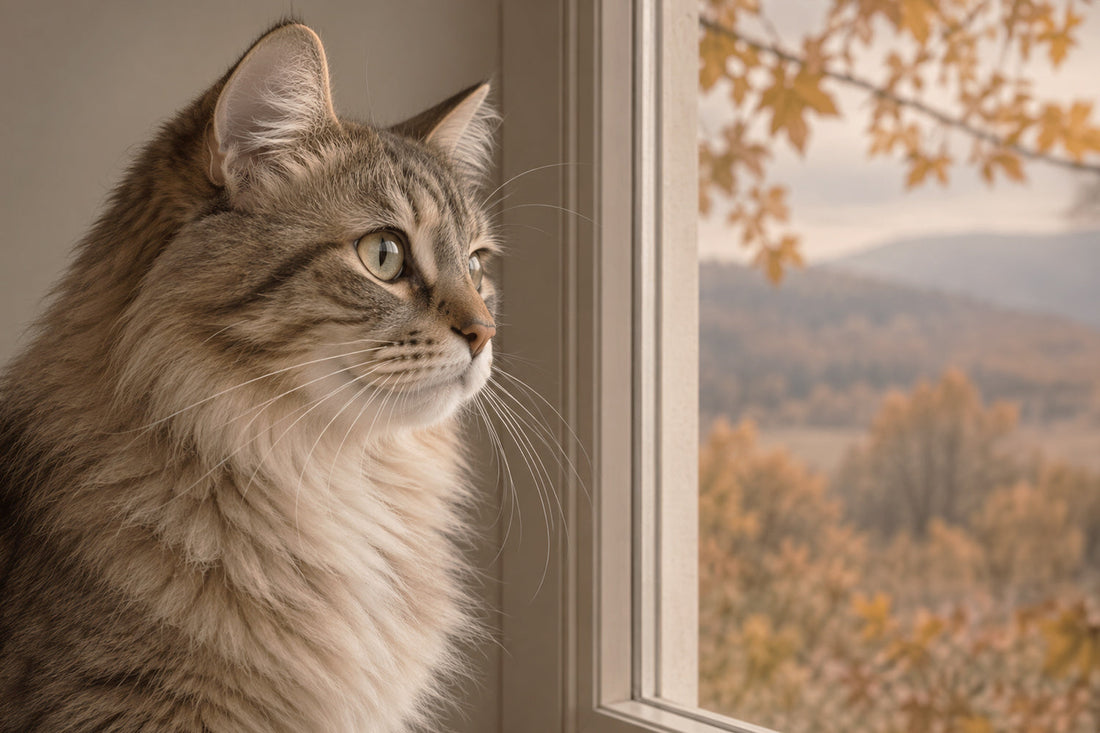
With the arrival of autumn, the days grow shorter, temperatures drop and cats — even the most adventurous ones — tend to spend more hours indoors. For indoor cats, this seasonal change can mean less stimulation, a more sedentary lifestyle and, in some cases, higher levels of stress. Adapting your home environment for autumn is simpler than it sounds and has a real impact on your cat's wellbeing.
Why Autumn Changes Your Cat's Behaviour
Cats are very sensitive to changes in light and temperature. As the photoperiod (daily daylight hours) shortens, the cat's body undergoes subtle hormonal changes that can influence its activity levels, appetite and need for warmth. It is completely normal for cats to sleep more in autumn and winter, seek out warm spots and show less interest in active play.
The problem arises when sedentariness becomes the norm: a lack of stimulation can lead to boredom, chronic stress or problem behaviours such as excessive scratching of furniture, overeating or aggression.
Create Warm, Safe Corners
The first thing your cat will do in autumn is search out the warmest spots in the house. You can get ahead of this by creating spaces designed with them in mind:
- A warm bed near a heat source (radiator, sunny spot), but without direct contact with the heater to avoid burns.
- Soft, washable blankets that the cat can knead and mark with their scent.
- Height: cats feel safer in elevated spots. A shelf, a platform or a window hammock are excellent options.
Discover our selection of cat beds, from classic models to thermal options and radiator hammocks, perfect for autumn and winter.
Scratching: A Need, Not a Whim
Scratching is one of the most important and most misunderstood behaviours in cats. It is not a destructive behaviour: it is a biological need. Cats scratch to keep their claws in good condition, stretch their muscles and mark their territory both visually and through scent. If they do not have suitable surfaces available, they will use the sofa, the corners of walls or the carpet.
In autumn, with more time spent indoors, this need intensifies. Providing the right scratching posts — in appropriate materials, heights and locations — is essential.
- Tall vertical scratching posts: allow the cat to stretch out fully. They should be stable and at least 60–70 cm tall.
- Horizontal scratching pads: many cats prefer to scratch horizontally. These are ideal as a complement.
- Location: place them near where the cat sleeps and in the areas they tend to scratch. Do not hide them away in a corner.
Explore our range of cat scratching posts: from sisal poles to activity trees with integrated platforms and dens.







Mental Stimulation: The Most Essential Ingredient in Autumn
A mentally stimulated cat is a more balanced, less anxious cat that is less prone to problem behaviours. In autumn, when outdoor activity decreases, indoor play becomes fundamentally important.
Interactive Play: Essential
Interactive play sessions — with a wand, plush mice or feathered toys — are the most complete way to stimulate a cat because they activate the hunting instinct, involve movement and build a positive bond with the owner. Ideally, two daily sessions of 10–15 minutes, preferably before meals to simulate the natural hunt–eat–groom–sleep cycle.
Autonomous Enrichment Toys
For the hours when you are not at home, autonomous enrichment toys are a great tool: food-dispensing balls, feeding puzzles, toys with tunnels or circuits that stimulate the cat's curiosity. Discover our selection of cat toys, from interactive options for playing together to dispensers and puzzles for independent stimulation.
The Window: Free Television for Your Cat
Access to a window with a good view is one of the greatest environmental enrichments for an indoor cat. In autumn, the movement of leaves, birds seeking shelter and changes in light are visual and auditory stimuli highly valued by cats. Place a bed or perch next to the window so your cat can watch the outside world in comfort.
Nutrition in Autumn: Necessary Adjustments
With less physical activity, some indoor cats tend to gain weight in autumn. Monitor portions and avoid free-feeding if your cat has a tendency to put on weight. If, on the other hand, your cat is very active or lean, the cold may mean they need a little more energy.
Hydration remains important even in winter: cats are naturally poor drinkers, and wet food or cat water fountains help maintain adequate hydration, which is especially beneficial for kidney and urinary health.
Signs of Stress in the Indoor Cat
- Excessive scratching or scratching in new places
- Over-grooming (licking until bald patches appear)
- Changes in litter tray use
- Increased aggression or, conversely, greater withdrawal
- Reduced appetite or compulsive eating
If you notice several of these signs persistently, consult your vet or a feline behaviourist to assess your cat's wellbeing.
Conclusion
Autumn does not have to be a dull season for your cat. With a few adjustments to the environment — warm corners, accessible scratching posts, regular play and mental stimulation — you can become the architect of a space that meets all their needs and lets them enjoy the colder months from the comfort of home.


