
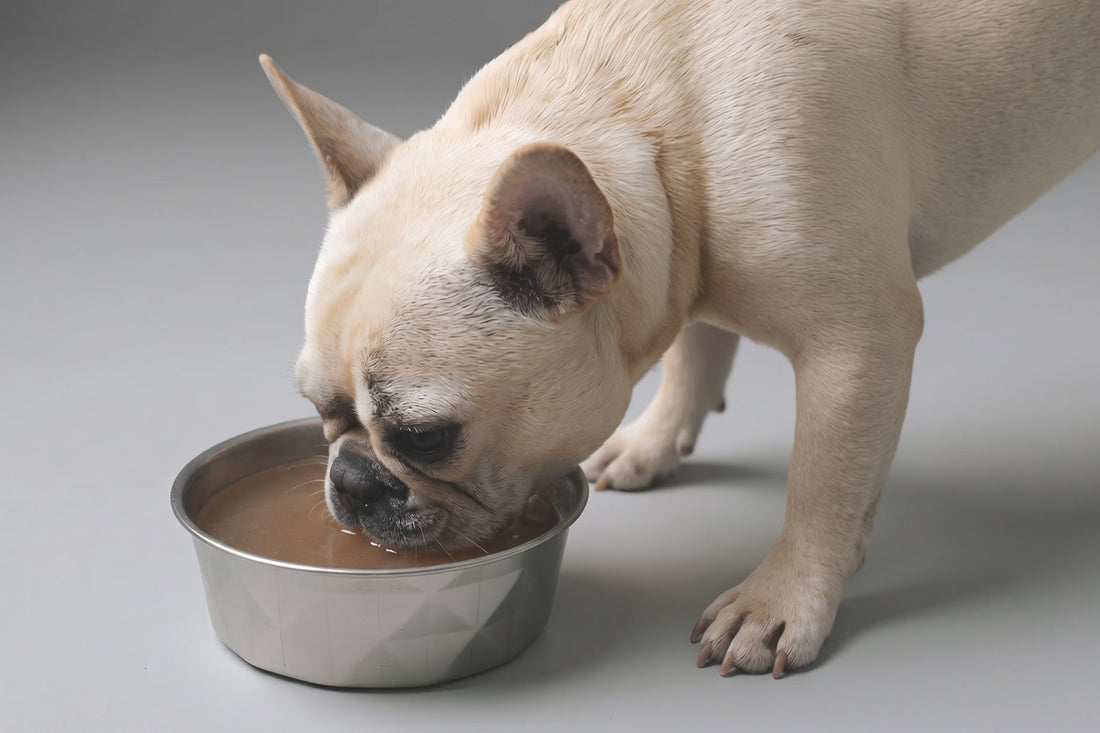
Moro's carrot soup is one of the best-known natural remedies for helping dogs and cats suffering from occasional diarrhoea. Although it dates back to paediatric medicine in the early twentieth century, we now know that its effect has a clear scientific basis and that it can be a very useful digestive support in certain cases.
In this article we explain exactly what Moro's carrot soup is, why it works, how to prepare it properly and when it is appropriate to use it (and when it is not). If you share your home with a dog or a cat, understanding this remedy can help you act sensibly when faced with a mild digestive upset. That said, if your pet often suffers from these episodes, the best course of action is to give them a nutritional solution specially designed to support digestive health. At OnlyFresh you will find plenty of gastrointestinal dry food options for dogs.
What is Moro's carrot soup?
Moro's carrot soup is a very simple preparation made from carrots, water and a small amount of salt. It was developed in 1908 by the paediatrician Ernst Moro as a way of reducing infant mortality associated with gastroenteritis.
Over time, it was observed that this preparation not only helped with rehydration, but also had a specific effect on certain intestinal bacteria responsible for diarrhoea. Today, it is also used as a complementary remedy in dogs and, in some cases, in cats, always under veterinary guidance.
What is interesting is that it is not simply a matter of "giving carrots", but of cooking them for the right length of time so that certain beneficial compounds are produced.
Why does Moro's carrot soup work for diarrhoea?
The role of oligosaccharides
When carrots are boiled for at least 60–90 minutes, compounds called oligosaccharides (specifically oligogalacturonides) are released. These molecules have a structure similar to certain receptors found on the intestinal wall.
What does this mean in practice?
Many pathogenic microorganisms (such as some bacteria and certain intestinal parasites) need to attach to the lining of the intestine in order to multiply and cause inflammation. Oligosaccharides act as "decoys": pathogens bind to them instead of attaching to the intestinal wall, which helps them to be eliminated in the faeces.
Additional benefits of carrots
In addition to this specific effect:
- They provide soluble fibre, which helps regulate intestinal transit.
- They contribute vitamins and minerals.
- They are gentle on the digestive system.
- They support the gradual recovery of the intestinal lining.
For this reason, Moro's carrot soup can be useful in cases of mild diarrhoea or as support while your pet's diet returns to normal.
Moro's carrot soup recipe, step by step
The key is to respect the proportions and the cooking time.
Ingredients
- 500 grams of carrots (preferably good quality)
- 1 litre of water
- A pinch or small teaspoon of salt
Preparation
- Wash the carrots well and cut them into small pieces.
- Put them in a pot with 1 litre of water.
- Bring to the boil, then simmer over a low heat for 60 to 90 minutes.
- It is important not to shorten this time.
- Blend the carrots until you have a smooth texture.
- Add hot water if necessary to top it back up to approximately 1 litre.
- Add a small amount of salt and mix well.
The texture should be like a purée or light cream. Before offering it to your pet, make sure it is at room temperature.
A practical tip: you can make a larger batch and freeze it in individual portions so that you have it ready if a mild digestive episode occurs again.



How to give Moro's carrot soup to a dog
In healthy adult dogs, when the diarrhoea is mild and their general condition is good, this guideline approach can be followed:
- In some cases a short fast (maximum 24 hours) is recommended, provided the dog is well hydrated and is not a puppy.
- Offer the soup in 3–4 small servings throughout the day.
- Maintain good hydration.
- The next day, if there is an improvement, gradually introduce a bland diet (for example, boiled turkey and mashed pumpkin).
If the diarrhoea clearly improves within 24–48 hours, you can gradually return to the usual diet.
What about cats?
With cats, more caution is needed.
Felines do not tolerate prolonged fasting well and can develop metabolic complications if they stop eating for too long. Therefore:
- It is not advisable to apply a fast without veterinary supervision.
- If your cat does not want to eat or seems lethargic, it is best to go straight to a professional.
- The soup can be used as support, but always taking the specific case into account.
When NOT to rely on Moro's carrot soup alone
Moro's carrot soup is a support, not a substitute for the vet. You should consult a professional if:
- The diarrhoea lasts more than 48 hours.
- There is blood in the stools.
- There is persistent vomiting.
- There is a fever or marked lethargy.
- The patient is a puppy or a senior animal.
- Your pet has kidney disease (because of the salt content).
- You suspect they may have ingested something toxic.
Diarrhoea can have many causes: sudden changes in diet, intolerances, parasites, bacterial or viral infections, stress or more complex conditions. Identifying the origin is key if the episodes recur.
The importance of diet for digestive health
When digestive problems appear repeatedly, it is worth reviewing the foundation: the everyday diet.
A quality diet, with well-chosen ingredients and formulas adapted to the real needs of the dog or cat, helps to:
- Maintain a balanced microbiota.
- Reduce intolerances.
- Improve stool consistency.
- Strengthen the immune system.
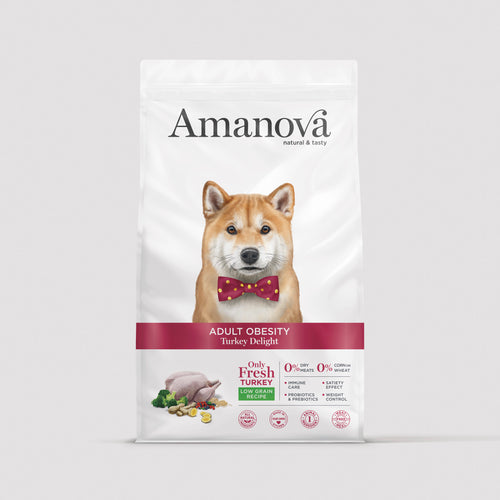
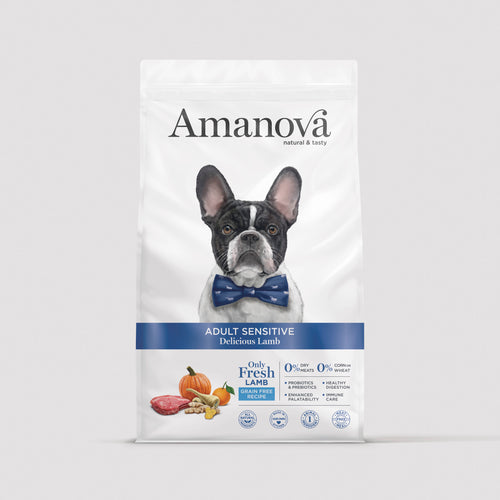
At OnlyFresh we work with precisely this approach: prioritising natural ingredients, digestibility and transparent formulations. We stock well-known brands such as Harper and Bone, Amanova and TrovetPlus, which offer options suited to different digestive sensitivities and specific needs.
For delicate digestion, it may be useful to consider:
- Premium dry food with high-quality proteins.
- More digestible natural wet food.
- Specific veterinary diets.
- Functional snacks that do not upset intestinal transit.
The key is not to react only when there is diarrhoea, but to build a solid nutritional foundation for the long term.
Practical tips for mild diarrhoea
If your dog has an isolated episode and is active:
- Observe their general condition.
- Keep fresh water constantly available.
- Avoid treats and extras during those days.
- Reintroduce food gradually once they improve.
- Monitor the frequency and appearance of the stools.
And above all, do not improvise with multiple remedies at once. Sometimes less is more: a simple, orderly approach lets you better assess how things are progressing.


