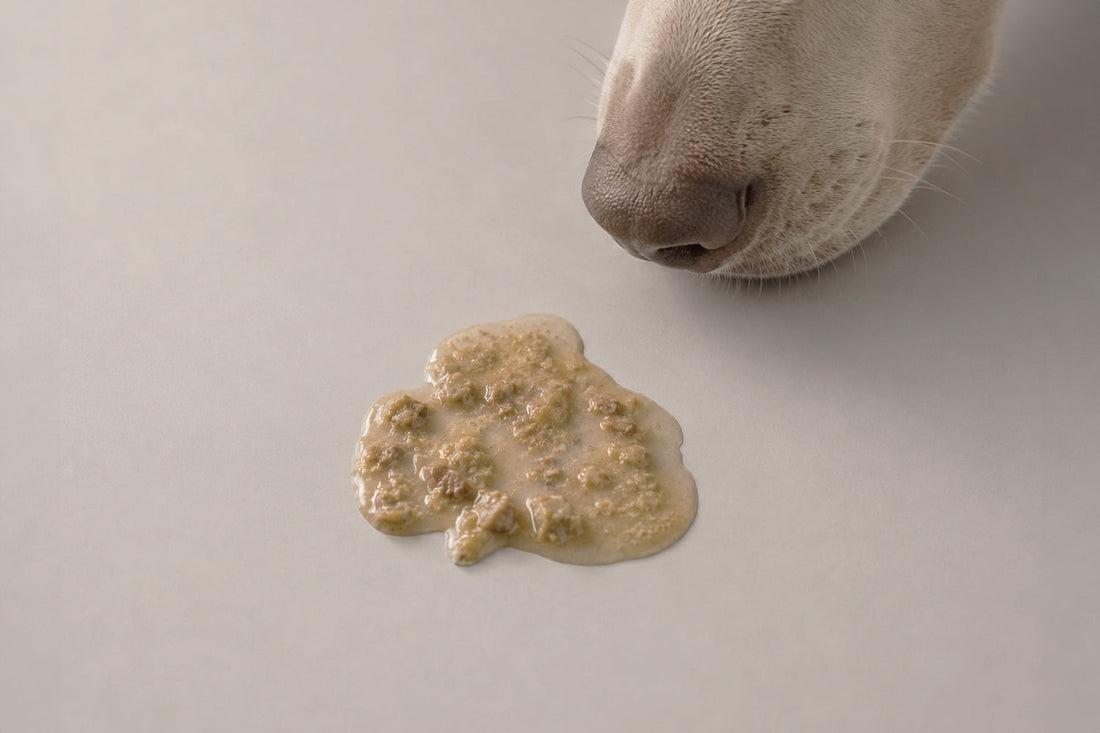
Vomiting in dogs is one of the most common reasons for a veterinary consultation. In most cases it responds to mild and passing causes; in others it is the first symptom of a serious disease requiring urgent attention. Knowing how to tell them apart can make the difference.
Dietary and behavioural causes
Eating too fast
This is the most common cause of vomiting undigested food. When the dog swallows food without chewing, the stomach receives an excessive load and expels it. The solution is to divide the daily ration into 2-3 meals and use a slow-feeder bowl that forces the dog to eat slowly.
Abrupt diet change
Introducing new food without a gradual transition irritates the gastric mucosa. To avoid this, mix the new food with the old one in increasing proportions over 7-10 days.
Food intolerance or allergy
Some dogs do not tolerate certain ingredients and respond with chronic, low-intensity vomiting. Diagnosis requires a vet-supervised elimination diet.
Ingestion of foreign body or toxin
Bones, toys, plastic, toxic plants or food scraps can irritate or damage the digestive tract. If you suspect your dog has ingested something potentially dangerous and is vomiting with signs of discomfort, take them to the vet without delay.
Gastric and oesophageal causes
Acute gastritis
Acute inflammation of the gastric mucosa produces vomiting of partially digested content or yellow bile. It may be caused by inappropriate food, stress, medication or infections. An isolated episode in an active dog usually resolves with brief fasting and a bland diet.
Bilious vomiting syndrome (yellow vomiting on an empty stomach)
Typically appears early in the morning before eating: the dog vomits yellow bile or white foam. It occurs when the stomach has been empty too long and bile acids irritate the gastric wall. It usually corrects by moving the last meal of the day earlier.
Megaoesophagus
In this condition the oesophagus dilates and accumulates food that does not reach the stomach. The content comes out without effort, without bile or gastric juices (regurgitation, not vomiting). More frequent in breeds such as German Shepherd, Labrador or Great Dane. Treatment includes feeding in an upright position and adapted diet.
Gastric dilatation-volvulus (GDV)
This is an emergency that can be fatal within hours. The stomach expands with gas and rotates, cutting off blood flow. Mainly affects large, deep-chested breeds (Great Dane, Rottweiler, German Shepherd). Signs: bloated, hard abdomen, unproductive retching, drooling, collapse. Take the dog to the vet immediately.
Infectious and systemic causes
Infectious gastroenteritis
Viruses such as parvovirus, bacteria such as Salmonella or Campylobacter and intestinal parasites (giardia, whipworms) can cause vomiting, often accompanied by diarrhoea, fever and weakness. Parvovirus is particularly serious in unvaccinated puppies.
Pancreatitis
Pancreatic inflammation causes intense vomiting, abdominal pain, fever and loss of appetite. More common in obese dogs or those on high-fat diets. Requires urgent veterinary diagnosis and treatment.
Kidney or liver failure
Kidneys and liver filter toxins from the body; when they do not work properly, accumulation of waste causes nausea and chronic vomiting. Usually accompanied by other symptoms: excessive thirst, abundant urine, jaundice or progressive weight loss.
Other systemic diseases
Diabetes, hypoadrenocorticism (Addison's disease), CNS diseases, uterine infections (pyometra) or tumours can also present with vomiting.
When to go to the emergency vet?
An isolated episode in an active, well-hydrated dog is not urgent. Take your dog to the vet without delay if:
- They vomit more than 2-3 times on the same day or on several consecutive days.
- The vomit contains red blood or looks like coffee grounds.
- The abdomen is bloated or hard, or the dog tries to vomit unsuccessfully.
- There is extreme weakness, they cannot get up or mucous membranes are pale.
- It is a puppy, an elderly dog or a dog with pre-existing conditions.
- You suspect they have ingested a toxin or foreign body.
What to do at home (mild cases)
If the episode is one-off, the dog is active and there are no warning signs:
- Remove food for 4-6 hours and offer water in small amounts.
- Reintroduce food with a bland diet: boiled chicken without skin with white rice in small portions.
- Return gradually to normal food over 2-3 days.
- If the dog vomits frequently, speak to your vet about switching to highly digestible gastrointestinal food.
- Consult your vet about using digestive supplements for dogs with recurring episodes.
Frequently asked questions
Why does my dog vomit yellow bile in the morning?
It is usually bilious vomiting syndrome: the stomach has been empty too long overnight. The simplest solution is to give a small portion before bedtime or move breakfast earlier. If it persists, consult the vet to rule out gastritis or liver disease.
Is it normal for a dog to eat grass and vomit?
Eating grass and vomiting it is a common and generally harmless behaviour. Dogs may do it to relieve gastric discomfort or out of habit. If it happens very often or the grass is accompanied by blood, consult the vet.
Can stress cause vomiting in dogs?
Yes. Chronic stress or abrupt routine changes (house moves, trips, new animals) alter gastric motility and can trigger vomiting episodes. In very anxious dogs, a highly digestible diet —such as a food with natural ingredients— and environmental management help reduce frequency.