
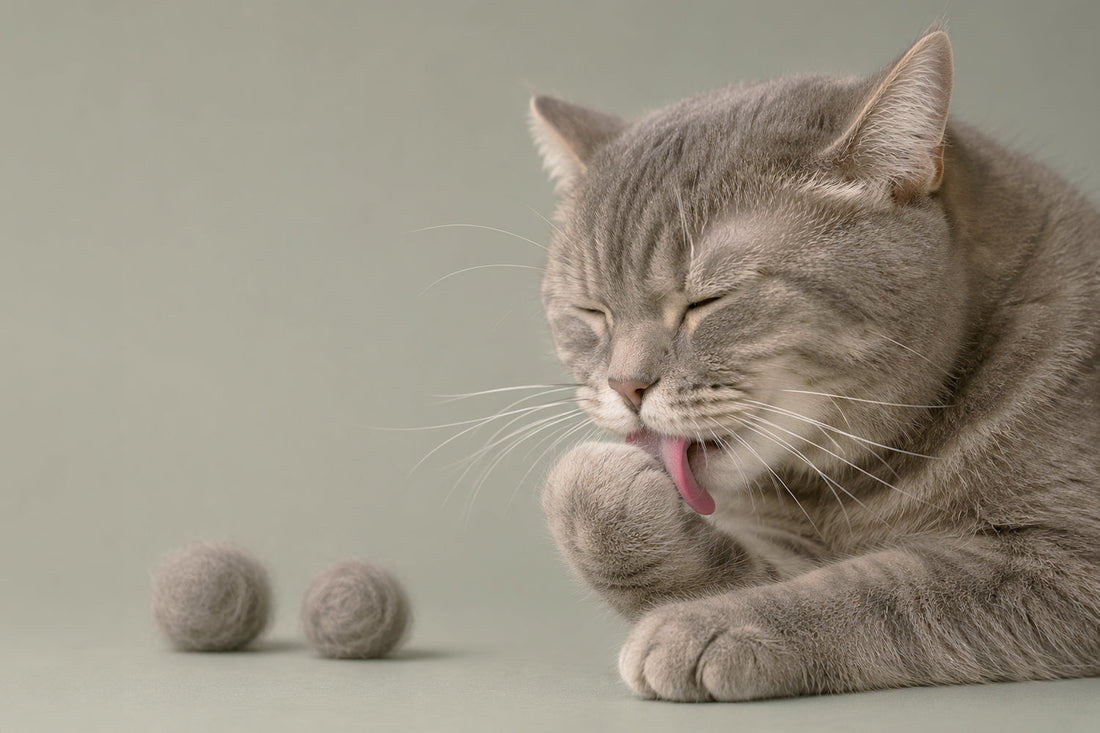
Felines are very clean animals that groom themselves frequently. Hairballs in cats are the result of their meticulous cleaning routine. However, in addition to being unpleasant for the people who have to clean them up, hairballs can cause serious intestinal blockages in our furry friends.
In today's article, we explain everything you need to know about hairballs in cats so you can help your feline companion maintain a healthy hygiene routine.
Is it normal for cats to vomit hairballs?
Although it may seem unpleasant, it is completely normal for cats to vomit hairballs. When cats groom themselves, the tiny hook-shaped structures on their tongue trap dead hair. Most of these hairs pass through the digestive tract and are expelled in the faeces. However, sometimes some hairs remain in the stomach, forming a ball that the cat will have to regurgitate to get rid of it.
Although we talk about balls, these hair accumulations usually take on a thin, tubular appearance after passing through the oesophagus. Keep in mind that hairballs in cats are more likely in long-haired breeds, like Persians.




In addition, cats that shed a lot or that groom compulsively are also more prone to vomiting hairballs.
Symptoms of hairballs in cats
Generally, cats regurgitate hairballs shortly after grooming. However, sometimes they are unable to eliminate them because they get stuck in the intestine. Take your small feline to the vet if it presents the following symptoms for more than two days:
- Continuous vomiting.
- Nausea or retching without producing a hairball.
- Loss of appetite.
- Lethargy.
- Constipation.
- Diarrhoea.
How to reduce hairballs?
Nothing can be done to completely prevent hairballs in cats. However, there are some guidelines that can reduce the frequency of these hair accumulations.
- Brush your cat regularly. The more dead hair you remove from your pet, the less will end up forming balls in its stomach. Combing or brushing your cat daily is a simple and effective way to reduce hairballs. It can also be a pleasant way to bond with your feline companion. If you cannot get your little furball used to brushing, take it to a professional groomer to be groomed and trimmed at least once a year.
- Use a special product for hairballs. Nowadays there are many products on the market specifically designed to reduce hairballs in cats. Your vet will help you choose the best solution for your cat.
- Avoid excessive grooming. If you think your cat's hairballs are the result of compulsive grooming, try to distract your cat with other activities that may interest it. For example, buy it a new toy or teach it a game that you can enjoy together.
- Offer your cat a special food to prevent hairballs. Today we can find special cat foods that help reduce the formation of hairballs. These formulas are rich in dietary fibre and are designed to improve the coat health of small felines and encourage the passage of hairballs through the digestive tract.
Caring for the nutrition and hygiene of your small feline is the best way to prevent the formation of annoying hairballs. Maintaining a regular brushing routine and offering an adequate diet will make a difference to the health and wellbeing of your cat.


