
The skin is the cat's largest organ and a direct reflection of its overall health. When persistent itching, hairless patches, crusts, or redness appear, there is almost always a dermatological disease behind it. Knowing the most frequent ones helps you act in time and avoid complications.
5 Most Common Skin Diseases in Cats
1. Ringworm (dermatophytosis)
Ringworm is perhaps the best-known dermatological disease in cats. It is caused by fungi of the genus Microsporum and Trichophyton that feed on keratin in the skin, coat and nails. The most characteristic signs are round bald patches, scaling, and, occasionally, mild itching. It particularly affects young kittens, animals with weakened defenses, and stray cats, where contagion is more frequent.
It is important to know that ringworm is zoonotic: it can be transmitted to people, so early diagnosis and treatment are essential. The vet will confirm the diagnosis with a Wood's lamp or fungal culture and prescribe a topical or systemic antifungal treatment. You can learn more in our article about ringworm in cats: causes, symptoms and treatment.
2. Allergic dermatitis
Dermatitis is skin inflammation whose most frequent cause in cats is flea saliva allergy (FAD or flea allergic dermatitis). In sensitive animals, a single flea bite is enough to trigger intense scratching, biting, and lesions on the neck, abdomen, perineum, and lumbosacral area.
There is also dermatitis from food or environmental allergies (dust, pollen), which require individualized study. Rigorous antiparasitic prevention is key: keeping external antiparasitic treatments up to date and disinfecting the environment, especially in spring and summer. Check our article on fleas in cats: causes, prevention and treatment for the best control strategies.
3. Mange
Feline mange is caused by microscopic mites that colonize the skin. The most common type is Notoedres cati, which produces very itchy mange with crusts, skin thickening and alopecia, usually starting at the head and ears and progressively spreading. Another frequent form is Otodectes cynotis, which mainly affects the ear canal (ear mange) and produces a dark discharge with intense itching.
Mange spreads through direct contact between animals and, in the case of Notoedres, can also affect people. Treatment with specific antiparasitics (spot-ons, injections or tablets) is very effective when started early, so at any suspicion it is best not to delay the vet visit.
4. Psychogenic alopecia
Unlike the previous ones, psychogenic alopecia does not have an infectious or parasitic origin: it is the result of compulsive grooming behavior linked to stress or anxiety. The cat licks and bites itself so frequently that it ends up creating symmetrical bald patches on the abdomen, flanks, or inner thighs.
The most common triggers are environmental changes (moving, arrival of a baby or another pet, renovations) or lack of stimulation. Diagnosis requires first ruling out physical causes (parasites, allergy), and treatment combines environmental management, environmental enrichment, and, in severe cases, anxiolytics prescribed by the vet or behaviorist.








5. Feline acne
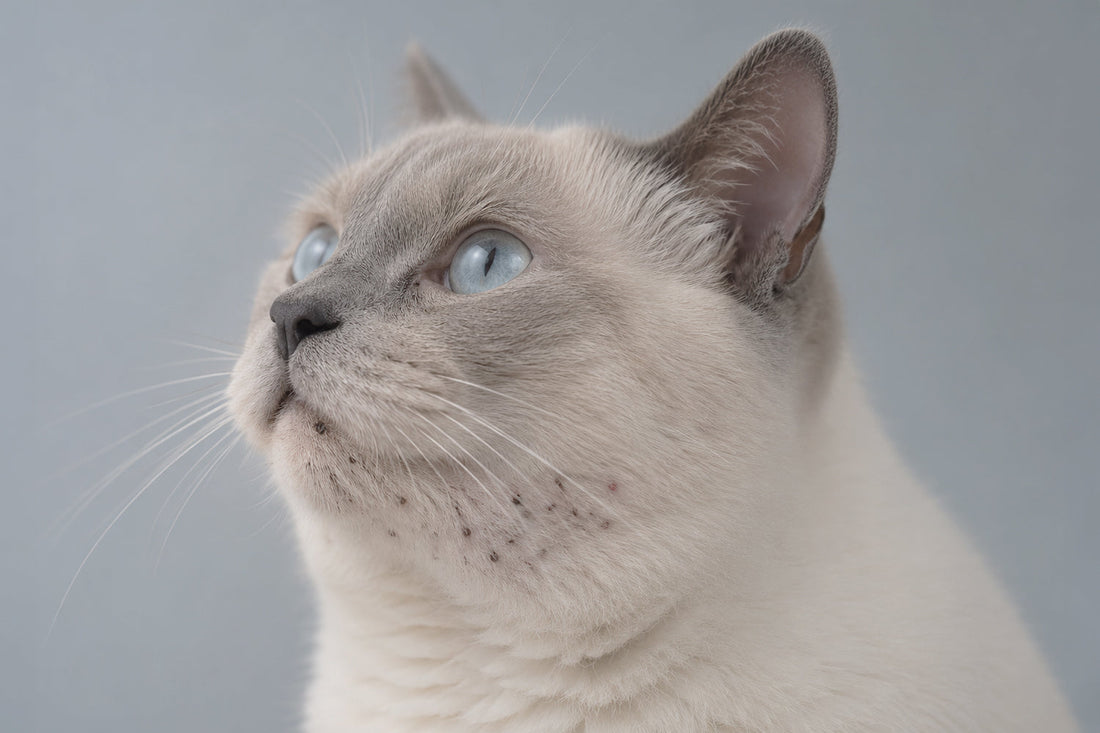
Feline acne is a chronic condition of the hair follicles of the chin and lip borders, areas particularly rich in sebaceous glands. It occurs when the pores get clogged with keratin and sebum, forming comedones (blackheads). In most cats it is a mild, sporadic disorder, but if it becomes infected it can progress to pustules, swelling, and swollen lymph nodes.
Predisposing factors include the use of plastic food bowls (which harbor bacteria), poor facial hygiene, or hormonal imbalances. Treatment is based on local cleaning with anti-seborrheic shampoo and, if there is secondary infection, topical or systemic antibiotics.
How to prevent skin diseases in cats?
Prevention is always simpler than treatment. These measures significantly reduce the risk:
- Regular antiparasitic treatment: apply external antiparasitic treatments at the frequency recommended by the vet.
- Balanced diet: a diet rich in quality proteins, Omega 3 and 6 fatty acids, and vitamins strengthens the skin barrier and immune response. A specific cat food for skin problems can make a difference.
- Environmental hygiene: regularly wash their accessories, bowls, and bed to reduce microbial and parasitic load.
- Periodic vet visits: annual check-ups allow problems to be detected early, before they worsen.
- Stress management: a stable environment with daily play and stimulation prevents psychogenic alopecia and other anxiety-related dermatoses.
When to go to the vet urgently?
Consult your vet without delay if you observe any of these signs:
- Intense itching that does not subside or progressively worsens.
- Hair loss over extensive areas or bald patches that rapidly expand.
- Open wounds, pustules, or abundant crusts.
- Changes in the smell of the skin or coat.
- Inflammation, redness, or facial swelling.
Frequently asked questions
How do I know if my cat has ringworm or is just shedding?
Normal shedding does not produce round patches or scaling. If you see circular alopecia with irritated skin at the edges, it is very likely ringworm. Always confirm with the vet, as it can be transmitted to people.
Can an indoor cat have fleas?
Yes. Fleas can enter the home through clothing, shoes, or other animals. That's why periodic antiparasitic treatment is necessary even for cats that never go outside.
Does nutrition affect a cat's skin health?
Yes, significantly. A diet low in Omega 3 and 6 or high in grains can worsen the skin barrier and encourage allergies. Choosing high-quality food with essential fatty acids and top-quality proteins directly contributes to maintaining healthy skin and a shiny coat.
Can feline acne be permanently cured?
In many cases it is well controlled with local hygiene and switching to ceramic or stainless steel bowls. It may recur in predisposed cats, but rarely causes serious problems if managed in time.
Can skin diseases in cats spread to other animals?
It depends on the cause. Ringworm and mange from Notoedres are contagious between animals and also to people. Allergic dermatitis and psychogenic alopecia are not transmissible.


