
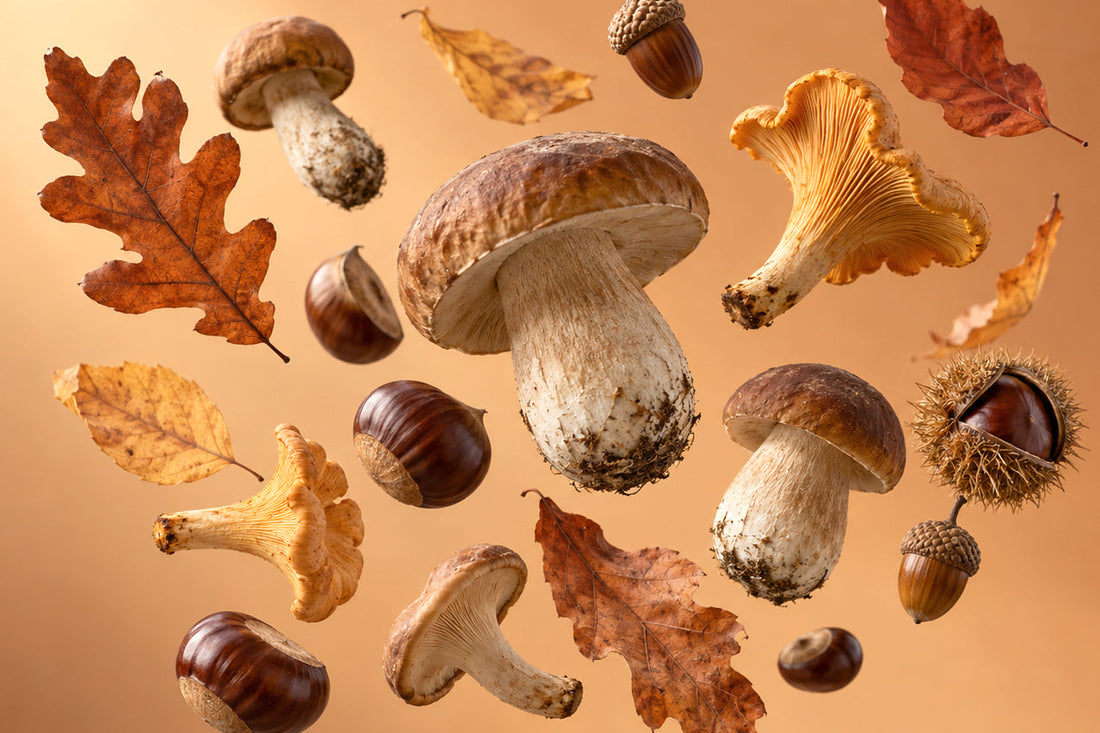
Autumn is one of the most beautiful seasons for heading out into the countryside with your dog: pleasant temperatures, colourful landscapes and trails without the summer heat. But the forest floor in autumn is also full of elements that can be toxic or dangerous for animals. Knowing what to look out for is the best way to prevent harm.
Mushrooms: the most serious autumn hazard
Autumn is peak season for wild mushrooms, and many of them are extremely toxic to dogs and cats. The problem is that animals detect them by smell and may ingest them before you notice.
The most dangerous ones
- Amanita phalloides (death cap): responsible for the majority of fatal poisonings. It contains amatoxins that destroy the liver and kidneys. Symptoms can take 6–24 hours to appear.
- Amanita muscaria (fly agaric): causes neurological symptoms: disorientation, excessive salivation, convulsions.
- Galerina marginata: as toxic as Amanita phalloides, frequently mistaken for edible mushrooms.
- Inocybe and Clitocybe: contain muscarine, causing intense cholinergic symptoms: lacrimation, diarrhoea, bradycardia.
If you suspect your pet has ingested a wild mushroom, go to the vet immediately without waiting for symptoms to appear. If possible, bring a sample or photograph of the mushroom. Do not induce vomiting on your own: in amatoxin poisonings, this may worsen absorption.
Acorns: an underestimated hazard beneath oak trees
Acorns are the fruit of oak trees, which are very common in parks and woodlands. They contain tannins — compounds that in large quantities can cause severe gastroenteritis and even kidney damage.
Symptoms of acorn poisoning include: vomiting, diarrhoea, lethargy, abdominal pain and, in serious cases, kidney failure. Young dogs and those that tend to eat anything they find on the ground are most vulnerable.
Your dog does not need to eat a large quantity: several acorns a day during a prolonged walk can accumulate. Pay particular attention in parks with oak trees in autumn.
Chestnuts: edible or toxic?
There are two types of chestnut tree and the distinction is important:
- Sweet chestnut (Castanea sativa): its fruit — the chestnut — is not toxic to dogs, although in large quantities it can cause digestive problems due to its high starch content.
- Horse chestnut (Aesculus hippocastanum): its fruit, the conker, IS toxic. It contains aesculin and saponins that cause vomiting, diarrhoea and, in serious cases, convulsions.
In practice, many dogs try to play with or chew both types. Identifying the tree is key: the horse chestnut has palmate leaves and a very distinctive spiny capsule around the fruit. If in doubt, prevent access.
Stagnant water: the invisible risk
Autumn rains create puddles and pools of stagnant water that can harbour hidden dangers:
- Cyanobacteria (blue-green algae): these thrive particularly in still water in autumn. They produce potent toxins that affect the liver and nervous system. A dog can be poisoned simply by drinking or licking the water.
- Leptospirosis: a bacterium present in water contaminated by rat urine. Puddles in urban areas and mud near rivers are risk zones.
- Parasites: stagnant water can be a source of internal parasite larvae.
Prevent your dog from drinking from puddles or stagnant water. Always bring fresh water from home.
Grass awns and barbed seeds: a mechanical hazard
In autumn, many grasses and field plants have seeds with awns or barbs that easily become lodged in dogs’ fur and skin. Once attached, they move in one direction only and can penetrate the skin, enter the ear canal, eyes or even the lungs.
After every walk through fields or long grass, always check: the spaces between the toes, inside the ears, skin folds and the fur around the muzzle. Remove any awn before it penetrates.
Antifreeze: a hazard at the onset of cold weather
With the arrival of cold weather, car antifreeze (ethylene glycol) appears in garages and car parks. It has a sweet taste that attracts animals, but is extremely toxic: it causes acute kidney failure within a few hours. Even a small amount can be fatal for a cat. If you suspect exposure, this is an immediate veterinary emergency.
What to do in the event of suspected poisoning
- Call your vet or an emergency veterinary clinic immediately.
- Do not induce vomiting without instructions from your vet: in some poisonings this can make the situation worse.
- If possible, collect a sample or take a photo of what your pet has ingested.
- Note the approximate time of ingestion and the estimated quantity.
- Keep your pet calm and resting while you travel.
Prevention: the best tool
Active vigilance during walks, especially in woodland areas and parks with trees in autumn, is your first line of defence. Teach your dog the "leave it" or "drop it" command to prevent them from picking up objects from the ground, and keep outdoor cats under supervision during periods of high mushroom activity.
Having natural dog snacks to hand during walks helps reward good behaviour and redirect attention when your dog detects something on the ground. For outdoor cats, natural cat snacks are equally useful as positive reinforcement during supervision.
Quality nutrition is the best foundation to help your pet face autumn in good condition. Discover our selection of natural dog food and natural cat food, formulated with high-quality ingredients for wellbeing throughout the season.


