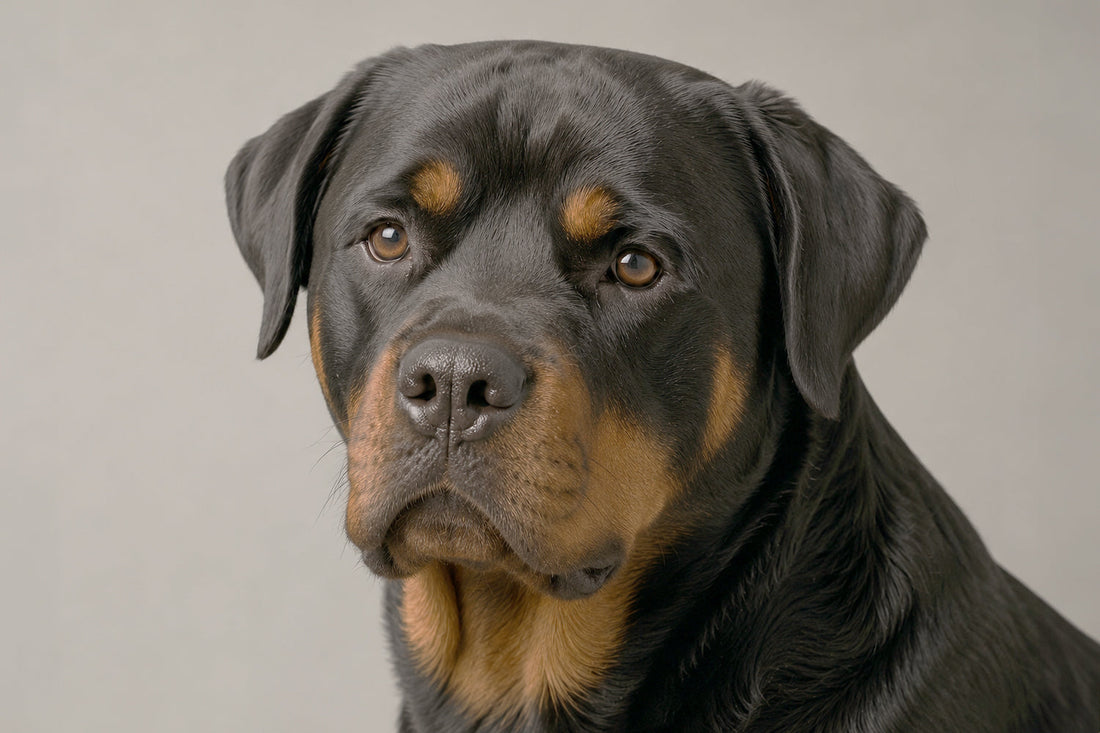
Talking about the most dangerous dog breeds is to tread into territory where myths have done more harm than any bite. For decades, certain dogs have carried a reputation that has more to do with media sensationalism than with scientific evidence. The reality is that no breed is born dangerous; what turns a dog into a risk for its surroundings is almost always a mix of mistreatment, lack of socialization and a lack of responsibility on the part of the person who cares for it.
This article does not seek to absolve or condemn any breed: it seeks to offer an honest, nuanced and well-founded view of a debate that has been oversimplified for far too long.
Do dangerous dogs really exist?
The question seems obvious, but the answer is not so straightforward. All dogs can bite; it is a biological capability shared from the chihuahua to the mastiff, but the likelihood that a dog will cause serious harm depends on a number of factors that have very little to do with breed and much to do with its life history. Various studies, such as those published by the American Veterinary Medical Association (AVMA), have repeatedly concluded that legislation based exclusively on breed (BSL, Breed-Specific Legislation) is not effective in reducing dog-related incidents. What does reduce incidents is responsible ownership, early socialization and the animal's welfare.
That said, we must not fall into the opposite extreme: certain dogs, with particular physical characteristics and without adequate education, can indeed be a real threat. The debate is not whether dangerous dogs exist, but why they are and who has the responsibility to ensure they are not.
What is considered a "dangerous dog" under the law?
In Spain, the regulation of dogs considered potentially dangerous has evolved over the years. The Ley 50/1999 established a list of breeds classified as “potentially dangerous” and required their owners to obtain a specific license, take out civil liability insurance and comply with a series of requirements in public spaces (muzzle and non-extendable leash, among others). This list included breeds such as the Pit Bull Terrier, the Rottweiler, the American Staffordshire Terrier or the Dogo Argentino, among others. However, in 2023 the Ley de Bienestar Animal (Ley 7/2023) came into force, which removes the concept of “dangerous breed” as a legal category and replaces it with an approach based on the individual assessment of the animal and the responsibility of the guardian. This represents an important paradigm shift: it is no longer the dog's DNA that determines its potential dangerousness, but its behavior and its history.
Large dogs considered dangerous: cases and nuances
When we talk about large dogs and their physical strength, the conversation gets complicated. It's not the same for a dog to bite as it is for one to do so with the jaw power of a Cane Corso or a Dogo de Burdeos. In serious incidents, the size and strength of the animal do make a difference in the severity of the injuries, and that cannot be ignored. However, canine behavior studies insist that aggressiveness is not an inherent trait of large or molosser breeds: it is the result of how they have been bred, treated and raised.
Dogs of these breeds that are properly socialized, with responsible owners and stable environments, live alongside families with children without incidents throughout their lives. Cases that end in tragedy, when analyzed in depth, almost always reveal a history of negligence, abuse or extreme isolation of the animal.
And small dogs? Can they also be dangerous?
This question makes many people uncomfortable, but the answer is yes. Small dogs bite more often than any official statistic reflects, simply because their bites rarely require medical attention and, consequently, are not reported. A Chihuahua or a Yorkshire Terrier with a history of untreated aggression can be a real problem, especially for very young children.
What happens is that, culturally, we tend to laugh at a small dog's aggression instead of correcting it, and that has consequences. Danger is not measured solely by kilos: it is measured in behavior, in life history and in how the owner manages that behavior. A poorly trained small dog and a large one in the same situation share the same underlying problem; the difference is the potential impact of their actions.
The top 10 most dangerous dog breeds (according to popular myth)
Pit Bull Terrier
The Pit Bull Terrier is, probably, the most stigmatized breed in the world. Its history is linked to dogfighting, a dark past that has haunted it for decades, but what is often forgotten is that these dogs were selected to be aggressive with other dogs, not with people. In fact, in clandestine rings any animal that bit a human was eliminated, which paradoxically produced selection in favor of docility toward people. Today, well-socialized Pit Bulls are known for their affection for people, their boundless energy and their intelligence. Problems arise when they fall into the hands of people who seek them precisely because of their bad reputation and breed them in conditions designed to make them aggressive.
Rottweiler
The Rottweiler is a working breed with centuries of history as a guard and herding dog. Its size, strength and protective instinct have made it one of the dogs most in demand for security, but also one of the most misunderstood. A well-raised Rottweiler is balanced, loyal and with a calm temperament that is rarely triggered without reason. Aggression problems in this breed are almost always associated with poor upbringing, lack of stimulation or owners who have not been able to manage its strong temperament. It is a breed that needs clear leadership, socialization from puppyhood and regular physical activity. When it has all that, its reputation as a dangerous dog breed is hard to sustain.
American Staffordshire Terrier
The American Staffordshire Terrier (AmStaff) shares roots with the Pit Bull and carries much of its stigma, although it is a different breed, with its own standard and a history of selection more oriented to the show ring than to fighting. It is a muscular, energetic dog with a great need for human bonding: it suffers greatly if isolated or deprived of stimulation. When well integrated into an active family that offers exercise, play and constant affection, the AmStaff is an extraordinarily faithful and low-conflict companion. Its inclusion on lists of dangerous breeds has more to do with its physical resemblance to the Pit Bull than with objective data about its behavior.
Dogo Argentino
The Dogo Argentino was created in Argentina in the 20th century with a very specific purpose: big-game hunting of wild boar and pumas. For that purpose a large dog was selected, with a powerful bite, resistant to pain and with a high activation threshold, qualities that, out of context, can sound threatening.
However, the breed standard also requires that the Dogo be gentle with people and balanced in temperament. It is a breed that requires an experienced owner, with time for socialization and exercise, and who does not seek an image of power in the dog but a real companion. When that happens, the Dogo Argentino is a noble dog and very attached to its family.
Presa Canario
The Presa Canario or Dogo Canario is a Spanish breed originating from the Canary Islands, where it was used for centuries as a guard dog and for handling livestock. It is a large animal, with an imposing physical presence and an independent, territorial and very loyal character to its family unit. Precisely because of these characteristics, it needs very careful socialization from puppyhood and an owner who knows the breed and can manage its guardian instinct. It is not a dog for beginners, and that is not the same as saying it is dangerous by nature. In responsible hands, the Presa Canario is a balanced dog; in the wrong hands, any breed with these characteristics can become a problem.
Cane Corso
The Cane Corso is one of the most physically imposing dogs: massive, muscular and with an expression that does not invite jokes. It is an ancient Italian breed, descended from the Roman war dogs, that has survived over time thanks to its usefulness as a guardian of property and livestock. Its temperament is serene and reserved: it is not usually a quarrelsome dog, but when it perceives a real threat to its family, its reaction can be forceful. The key to living well with a Cane Corso is the same as with any large molosser-type dog: training from puppyhood, broad socialization, daily exercise and an owner who understands that this dog is not an ornament but a living being with specific needs.
Dobermann
The Dobermann has a reputation for being an aggressive and difficult dog, but those who live with this breed describe something very different: an animal elegant, intelligent, extremely sensitive and very bonded to its family. The Dobermann was developed in Germany in the late 19th century as a personal protection dog, and that role gave it an alert and reactive temperament which, without proper training, can lead to problematic behaviors. With early socialization and consistent training, the Dobermann is one of the easiest dogs to train and learns at a speed that surprises even professionals.
Husky Siberiano
The Husky Siberiano on this list may come as a surprise, but it appears in several studies on bite incidents, especially in English-speaking countries. The reason has nothing to do with aggression toward people, but with its high prey drive, which can be triggered by other animals or small children who run. It is a breed designed to work in a pack for hours: it needs intense exercise, mental stimulation and constant companionship. A bored Husky with no outlet for its energy is a Husky that will develop undesirable behaviors. The most common mistake with this breed is adopting it because of its striking appearance without understanding that its wild nature and independence require an owner with a lot of experience and time.
Pastor Alemán
The Pastor Alemán is one of the most intelligent and versatile breeds in the world: it works as a police dog, search-and-rescue dog, guide and therapy dog, but it also repeatedly appears in bite statistics. The explanation isn't that it's a dangerous breed: it's that it is one of the most numerous breeds in the world, and the greater the number of individuals, the greater the absolute number of incidents. A Pastor Alemán poorly socialized, raised in isolation or without the stimulation its active mind needs, can develop reactive behaviors which, given its physical capacity, become dangerous. Well raised, it is one of the most balanced and reliable dogs that exist.
Akita Inu
The Akita Inu closes this list with an important warning: it is a breed that does not forgive its owner's lack of experience. It is a dominant, independent dog with a very strong personality that does not suit owners who are looking for an instinctively obedient dog. Its nature is more like that of a cat than a Golden Retriever: it decides when to interact, clearly marks its boundaries and does not always get along well with other dogs, especially of the same sex. However, with an owner who understands and respects its temperament, the Akita is a dog of extraordinary loyalty and in Japón it is considered a national symbol for a reason. Its inclusion on lists of dangerous breeds reflects the difficulty of handling it, not intrinsic aggressiveness.
The influence of the owner: who trains whom?
There is a question that should be at the center of any debate about the danger posed by dogs, and that is rarely asked with the clarity it deserves: what kind of person is behind each dog? Research in animal behavior is consistent on this point: the environment in which a dog grows up, the treatment it receives, the quality of its early socialization and the consistency of its training are the factors that most determine its behavior.
A dog raised with violence learns that the world is a threat and responds accordingly. An isolated dog develops fears that, over time, can lead to defensive aggression. A dog without clear rules or limits does not know how to behave in the world, and that uncertainty also generates conflicts. Breed matters much less than popular culture would have you believe.