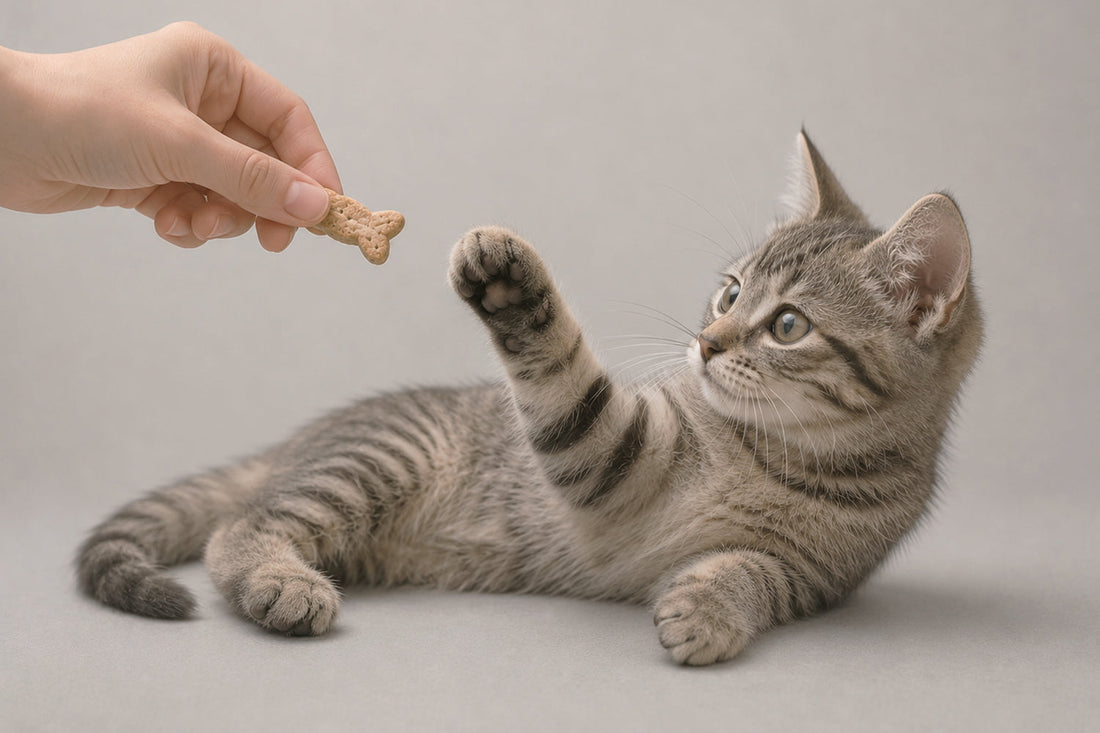
To make living with our animal companions work, we need to establish real and useful communication with them. Education is one way to do it and, although we are very familiar with training methods for dogs, we know very little about how to develop these processes in cats.
If you are also wondering how to train your cat, this article is for you. Below, we will reveal the secrets of the feline mind so you can become familiar with their behavior and their ways of relating both to themselves and to their environment.
A cat is not a dog
Cats and dogs are the favorite companions of most humans on earth. This can lead us to think they are alike and that our way of interacting with them should be similar. However, nothing could be further from the truth.
Cats, unlike dogs, are not gregarious animals. That means their natural instinct doesn’t lead them to live in a community with other cats and even less with other species. Dogs, genetically predisposed to live in packs, feel comfortable pleasing the leader (in this case, you). That is why discipline and authority work to create behavior patterns in them.
Cats, on the other hand, are far less interested in you and what you want. Instead, their focus is on themselves. Therefore, they do not learn or respond through punishment, discipline, or authority. At most, through these means, you will instill fear in the animal, but this will only create distrust in your relationship.
How to train a cat? Tips and tricks
Training a cat is a very difficult task that does not always give the results we want. For this reason, here are some tips that will help you establish basic rules of coexistence with your kitty, improve your relationship, and help them socialize:
- Start when they are young: a kitten is much more willing to learn than an adult. Getting them used to contact with people, nail trimming, or going to the vet in a carrier or other means at an early age will make them more open to communication later on.
- Don’t rely on authority: instead, the best way to prevent them from continuing to behave inappropriately is to distract them and redirect their attention to other things. For example, if you want them to make less noise at night, make sure they are active and playing during the day so they are tired at night. Games and rewards can also help socialize your kitty and teach them some house rules. If you’re looking for healthy and delicious rewards, check out the chicken and turkey snacks, the beef snacks, and the chicken, salmon and tuna snacks from Harper and Bone. Discover gourmet recipes that will support your kitty’s health thanks to their high protein content and the addition of essential fatty acids such as Omega 3 and Omega 6.
- Respect them: every cat lover knows that a cat is a cat and that there is little point in trying to change them. Understanding their nature and their personality will help you build a deeper connection with them and reduce fear and stress for both of you.
- Be patient: adult cats or those rescued from the street can take a long time to socialize, but with perseverance, care, and love, you can certainly train them.