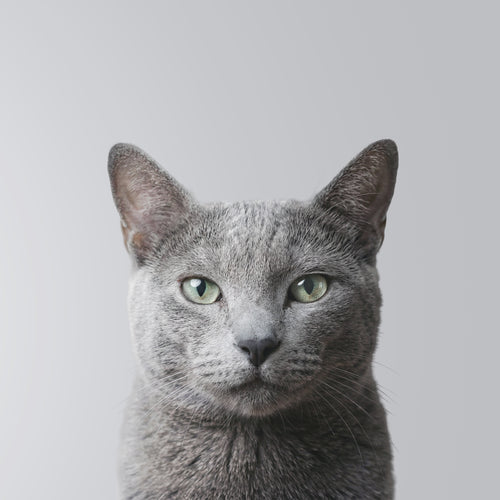
British Longhair
The British Longhair is the semi-longhaired version of the celebrated British Shorthair, sharing its robust structure, calm temperament and that unmistakable expression with rounded cheeks and large eyes. It is a serene, independent without being distant cat, that adapts easily to indoor life and offers discreet but constant affection to those who share its home.
Features


Origins
The origins of the British Longhair are closely linked to those of the British Shorthair, the oldest feline breed in Great Britain, descended from domestic cats that arrived with the Romans and for centuries populated British farms and cities as rodent hunters. In the late 19th century, British breeders began to select and standardise these robust short-haired cats, and in the process crossings with Persians were introduced to reinforce the density of the coat and the roundness of the head. These crossings left in the breed's gene pool the gene responsible for long hair, which reappeared recessively in some British Shorthair litters.
For much of the 20th century, these semi-longhaired specimens were considered simply an undesirable variation within Shorthair standards and received no recognition of their own. It was not until the late 20th and early 21st centuries that several feline associations, including the FIFe and later TICA and WCF, decided to recognise the British Longhair as a distinct breed, appreciating its own aesthetic value. Today it coexists with the Shorthair as a variant with a consolidated identity, increasingly sought after by those who desire British sturdiness with a more flowing coat.
Characteristics and aptitudes
The British Longhair maintains the cobby structure characteristic of the breed: compact, broad-chested body, short and sturdy legs, and a rounded head with prominent cheeks that give it that so recognisable "teddy bear" expression. Its large, round eyes are usually copper or intense golden in blue specimens, though they vary according to coat colour. The fundamental difference from the Shorthair lies in the coat: semi-long, dense and with a softer texture, forming a slight ruff around the neck and tufts between the toes, without reaching the length or volume of a Persian.
Its temperament is calm, balanced and undemanding. It is a cat that enjoys human company without being intrusive, that tolerates being alone well during the working day, and that is rarely vocal or demanding. It adapts well to apartment living, coexists without problems with children and other animals when introductions are gradual, and its activity level is moderate: it prefers short play sessions followed by long naps. This placidity makes it a highly appreciated breed for homes seeking an affectionate but serene cat.
Care
The semi-long coat of the British Longhair requires regular grooming, two or three times a week, with a medium or wide-toothed comb to remove dead hair and prevent the formation of knots, especially around the neck and the back of the legs. During moulting season it is advisable to increase the frequency of grooming, as its dense undercoat sheds quite a lot of hair. Unlike the Persian, its coat does not mat easily, making its maintenance considerably simpler.
Given its calm temperament and natural tendency towards a sedentary lifestyle, it is essential to monitor its diet and encourage daily exercise through interactive toys and active play sessions, as this breed has a marked predisposition to obesity. It is also advisable to pay attention to eye hygiene, since the conformation of its face can encourage a slight tearing, and to maintain regular veterinary check-ups that include cardiac and renal monitoring. The diet should be of high quality, calculated according to its actual activity level and not according to its appetite, which tends to be generous.
Most common diseases
The most significant condition in the breed is hypertrophic cardiomyopathy (HCM), the thickening of the heart muscle that constitutes the most common hereditary heart disease in cats and that in the British Longhair, as in its short-haired relative, presents an incidence above the feline average. It is recommended to carry out periodic echocardiograms, especially in specimens intended for breeding, to detect the condition early and prevent its transmission. Polycystic kidney disease (PKD) has also been described, inherited from the Persian component present in the origin of the breed, which causes the progressive formation of cysts in the kidneys; reliable genetic tests exist to identify carriers.
Due to its tendency towards a sedentary lifestyle and its compact body, obesity is a frequent risk that worsens both cardiac and joint problems, so weight control and daily activity are key preventive measures of the first order. With adequate veterinary follow-up, responsible genetic testing by breeders and well-adjusted feeding, the British Longhair generally enjoys a long and healthy life.