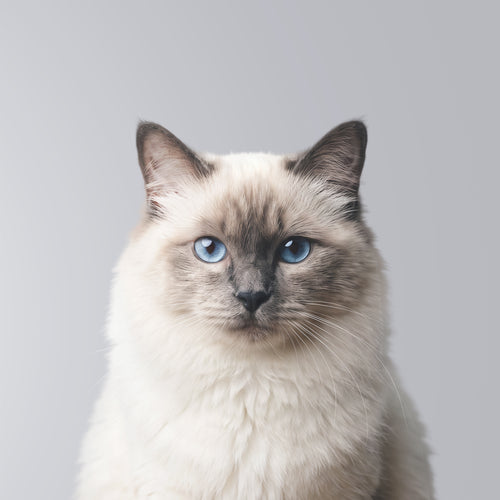
Somali Cat
The Somali Cat is the long-haired version of the Abyssinian, sharing its energetic, curious and playful character. With its magnificent ticked coat and bushy plumed tail, it is one of the most spectacular and active domestic cats.
Features

Height at the withers
Male: 24–28 cm
Female: 22–26 cm

Weight
Male: 4–5.5 kg
Female: 3–4.5 kg

Life expectancy
12–16 years

Coat
Semi-long, dense and soft, with a ticked pattern (each hair has multiple colour bands). Full, bushy fox-like tail.

Color
Ruddy (tawny), red, blue, fawn

Diet
The Somali Cat is very active and needs a diet rich in high-quality animal protein to sustain its metabolism and muscle mass. Combine wet food with quality dry food. Adequate taurine intake is essential for heart health.

Care and diseases
The semi-long coat needs brushing 2–3 times a week to prevent tangles. During seasonal shedding, brush daily. Optional bath every 4–6 weeks. Weekly ear cleaning. Regular dental hygiene.
Origins
The Somali Cat arose as a natural mutation of the Abyssinian through a recessive long-hair gene that occasionally appeared in litters. In the 1960s–70s in the USA and Canada, selective breeding began. Recognised by the CFA in 1979. The name refers to Somalia, a neighbour of Ethiopia (homeland of the Abyssinian).
Characteristics and aptitudes
The Somali Cat is extroverted, playful and intelligent. It loves to explore, climb and play. Affectionate without being overly dependent. Gets along well with active children and other cats. Its voice is soft. Needs constant stimulation — gets bored easily.
Care
The Somali needs plenty of environmental enrichment: cat trees, shelves, interactive toys and daily play. Not suited to busy people with little time. Can live indoors with enough space. Can walk on a harness. Needs sturdy scratching posts.
Most common diseases
Main health conditions of the Somali Cat:
- Progressive retinal atrophy (rdAc-PRA): the most important hereditary condition. Mandatory genetic test from responsible breeders. Leads to progressive blindness.
- Pyruvate kinase deficiency (PK-def): hereditary haemolytic anaemia. Genetic test available.
- Periodontal disease: very common. Weekly dental brushing and annual vet checks.
- Renal amyloidosis: uncommon. Annual kidney check-ups from age 6.
To care for the Somali's dental health, read our guide on cat teeth. And to keep this active cat stimulated, discover the best cat toys.