Ocicat
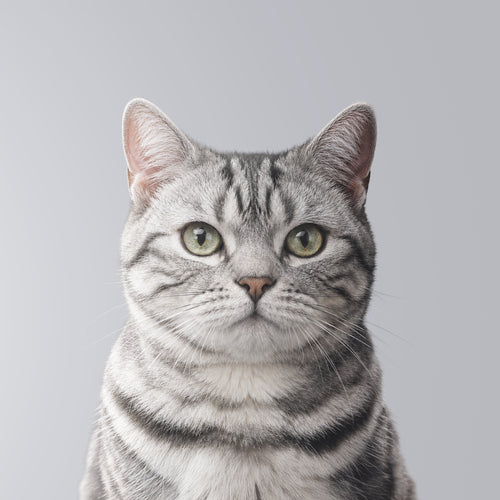
The Ocicat is a domestic cat with a wild appearance: its leopard-like spots and athletic body recall the ocelot, but its character is completely domestic, sociable and adaptable. It is the result of crossing the Siamese, Abyssinian and American Shorthair.
Features

Height at the withers
Male: 28–32 cm
Female: 25–30 cm

Weight
Male: 4–6 kg
Female: 3–4.5 kg

Life expectancy
12–15 years

Coat
Short, silky and shiny, with a spotted pattern (spotted tabby). Each spot is unique, like a fingerprint.

Color
Tawny, cinnamon, chocolate, blue, lilac, fawn, silver and their spotted combinations

Diet
The Ocicat is an active, muscular cat that needs a diet rich in high-quality protein. A balanced diet with meat as the first ingredient helps maintain muscle and energy. Watch the weight: it can gain weight if overfed.

Care and diseases
The short coat requires minimal maintenance. Weekly brushing with a rubber glove removes loose hair and highlights the spotted pattern. Occasional bath. Weekly ear cleaning. Pay special attention to dental hygiene.
Origins
The Ocicat was born by accident in 1964 in Michigan (USA) when breeder Virginia Daly crossed a Siamese with an Abyssinian. In one litter appeared a spotted kitten resembling an ocelot. Her daughter named it 'Ocicat'. American Shorthair was added later to broaden the colour range. Recognised by the CFA in 1987.
Characteristics and aptitudes
The Ocicat looks wild but has the temperament of a sociable domestic cat. Extroverted, curious and adaptable. Not shy with strangers, children or other animals. Learns tricks and can walk on a harness. Does not tolerate prolonged solitude.
Care
The Ocicat needs daily play and environmental enrichment. Adapts well to indoor life with enough space. Enjoys food puzzles. Responds well to positive training. Can walk on a harness. Can live with dogs if socialised early.
Most common diseases
Main health conditions of the Ocicat:
- Hypertrophic cardiomyopathy (HCM): annual echocardiography from age 2.
- Hepatic amyloidosis: annual liver function check from age 5.
- Gingivitis and periodontal disease: weekly dental brushing recommended.
- Kidney disease: annual kidney monitoring. Adequate hydration with wet food.
Dental health is especially important in the Ocicat. Read our guide on cat teeth and how to prevent gingivitis. To keep it active and stimulated, discover the best cat toys.